


The Healing Power of Dogs at GRIT: Research, Presence, and the Everyday Work of Kali & Nash
By: Michelle Madden, Executive Director
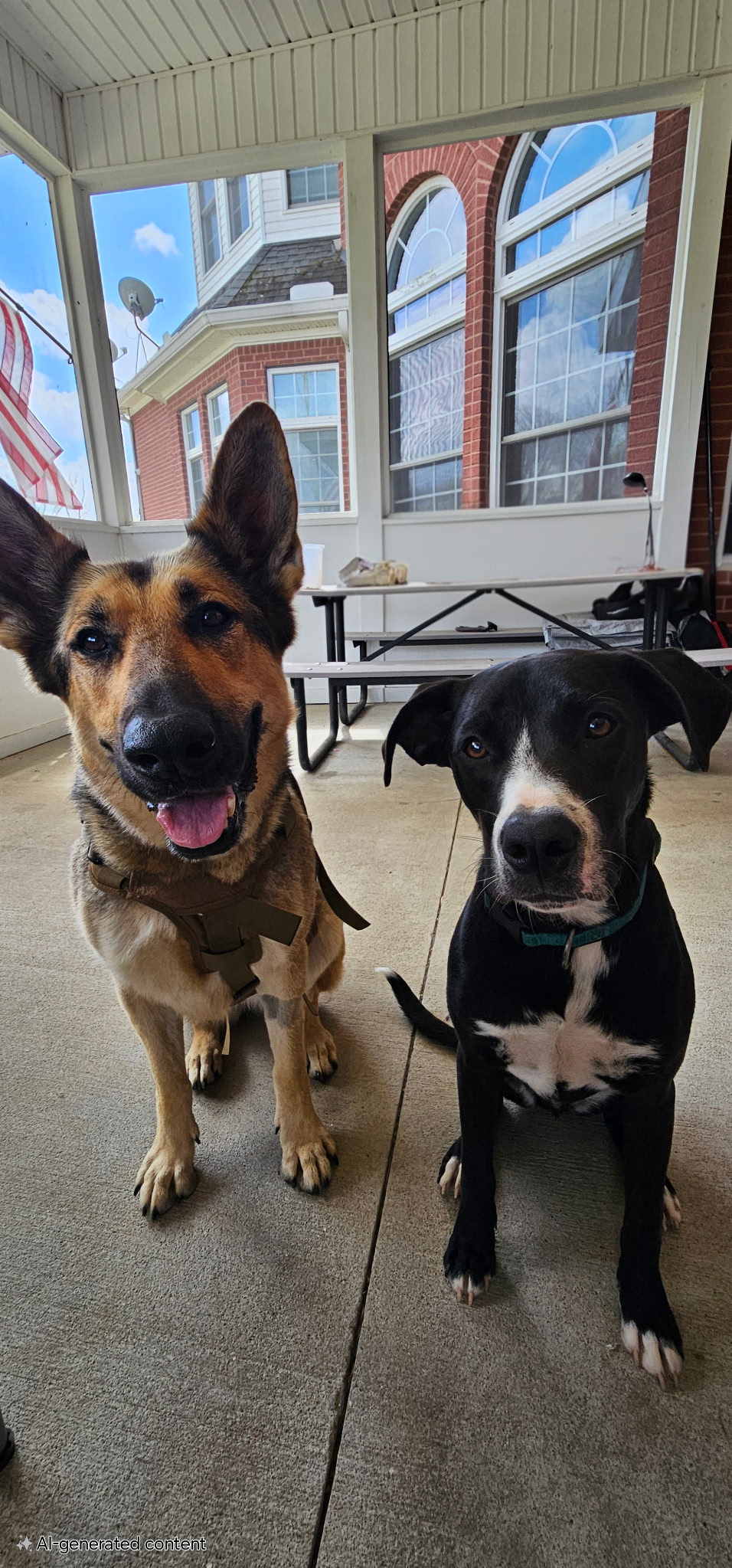 They are not certified service dogs. They are not formally trained therapy dogs. And yet, for many of the men who come through our doors, they become one of the most grounding, regulating, and unexpectedly meaningful parts of the healing environment. This article combines what research tells us about the benefits of dogs in trauma informed care with what we see, day after day, inside our house.
What the Research Tells Us
A growing body of research supports the role of dogs in mental health settings, particularly for populations exposed to chronic stress and trauma such as first responders and military service members. Studies on Animal Assisted Interventions (AAI) have shown that interaction with dogs can:
- Reduce physiological stress responses, including heart rate and cortisol levels
- Improve emotional regulation and grounding
- Decrease symptoms associated with PTSD, anxiety, and depression
- Improve sleep quality and overall sense of well being
- Increase social connection and engagement in treatment
Why This Matters for First Responders & Military
First responders and military members are trained to stay alert, anticipate threat, and push through discomfort. Over time, that level of vigilance becomes a default state. Dogs meet that reality differently than people do. They don't require explanations. They don't judge reactions. They respond to tone, body language, and presence; often helping clients reconnect with their bodies and emotions without having to talk their way there first. For many of our clients, this becomes a bridge: from constant alertness to moments of calm; from isolation to safe connection; from control to regulation.
Who Kali and Nash Are
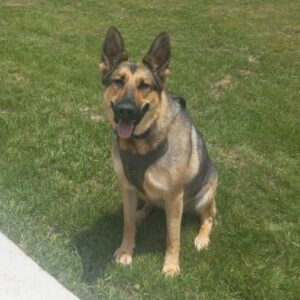
Kali is our 7-year-old German Shepherd who joined GRIT in May 2024, right as the second chapter of her life, retirement, began. In many ways, she's a rescue herself. She arrived ready for something slower, steadier, and more meaningful, settling into campus life with quiet confidence. Calm, observant, and grounded, Kali carries herself like she knows exactly where she belongs.
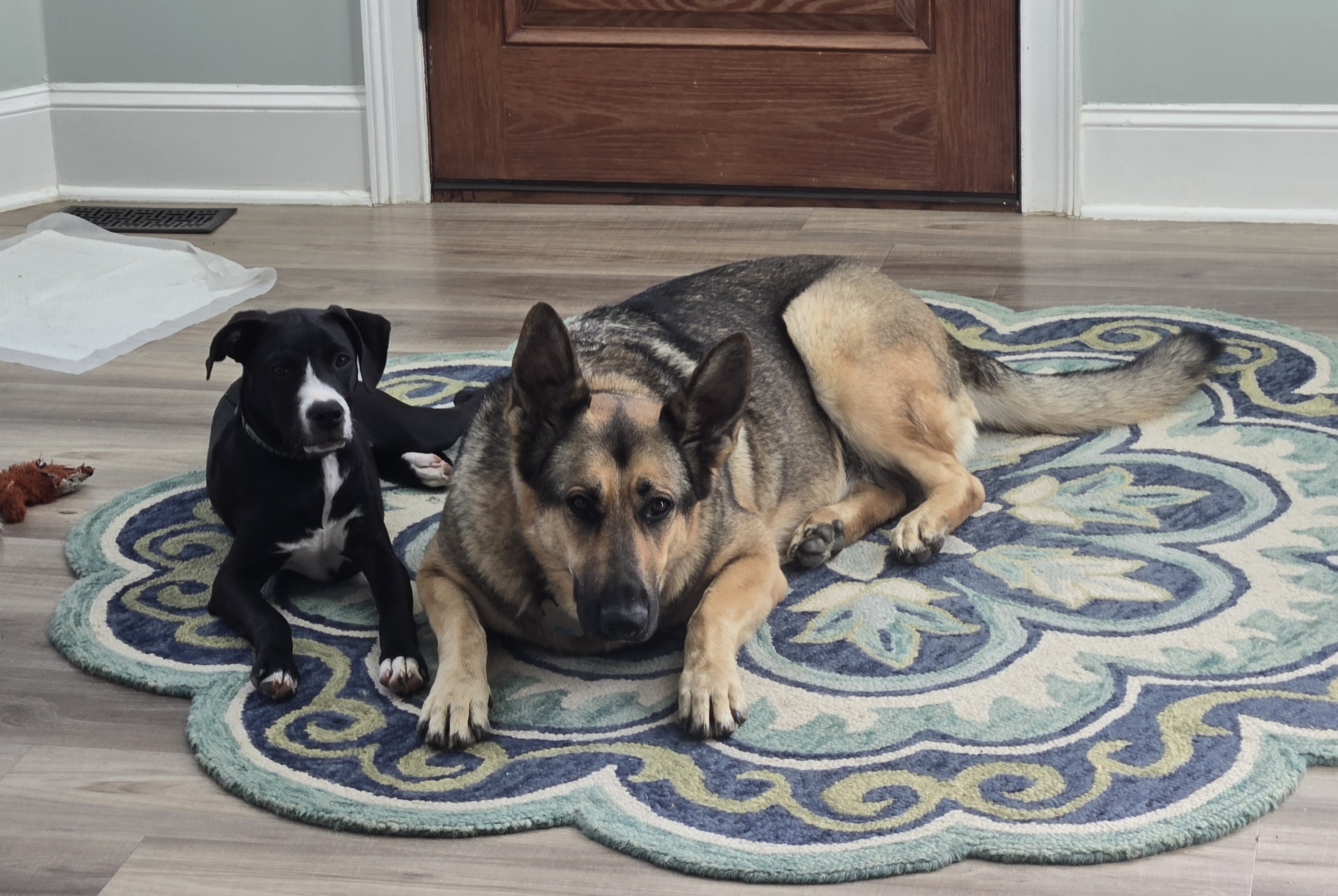 Coming from Florida, her first Tennessee winter was an adventure; snow, cold mornings, and the discovery that she could stretch her legs chasing deer, turkeys, and anything else that dared to move. Despite her size and strength, Kali is a gentle presence. She's spoiled, well-loved, rarely begs for scraps, and happily accepts a treat when offered. What truly sets her apart is her "inner therapist" Kali seems to instinctively know when someone is struggling, choosing to sit nearby, lie at their feet, or gently lean her whole body against someone carrying anxiety, depression, or that familiar internal vibration trauma survivors often describe. She doesn't demand attention, she offers presence. For many clients, that steady companionship becomes one of the safest connections they experience here.
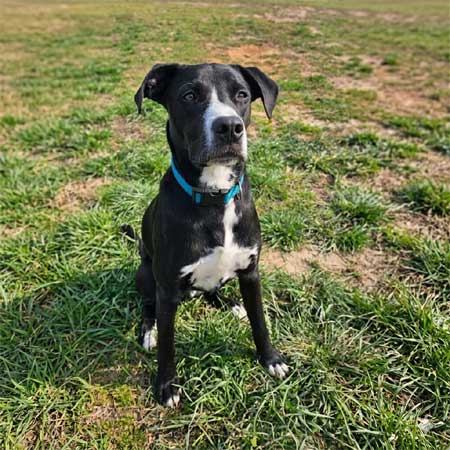
Nash is our 7-month-old Lab mix puppy; playful, affectionate, curious, and still learning how the world works. He brings laughter, movement, and just enough chaos to remind everyone that growth is often messy and joyful at the same time. What he lacks in timing, he makes up for in personality. When he's not in the middle of one of his now-famous "Nash Dashes" he's curled up on the couch soaking up cuddles or trying to convince Kali to play. From day one, Nash joined Kali greet new arrivals like family, easing nerves and inviting laughter. Together, Kali and Nash remind our clients that healing can be steady or playful, and both matter.
 Why It Matters That They're Always Here
The consistency of their presence is key. Kali and Nash aren't brought in for a group and then removed. They're there during ordinary moments: between sessions, during breaks, in the evenings, on walks around the property. These unscripted interactions often become some of the most meaningful:
- A quiet hand on Kali's back during a hard conversation
- A deep breath taken without realizing why
- A laugh when Nash decides it's time to play at exactly the wrong moment
Two Dogs, Two Sides of Healing
There's something intentional in the contrast between Kali and Nash. Kali reflects steadiness, boundaries, and calm presence. Nash reflects growth, curiosity, and learning through experience. Together, they mirror different stages of recovery; where many clients have been, and where they're learning to go. Some clients connect immediately with Kali's grounding presence. Others rediscover play, softness, and humor through Nash. Both matter.
 Not a Replacement. A Complement
It's important to be clear: Kali and Nash do not replace therapy, psychiatric care, or structured programming. They support it. They help create an environment where people feel safe enough to engage, regulated enough to stay present, and human enough to remember they're more than their diagnosis or job title. That's what holistic care looks like at GRIT.
Part of the Culture, Not a Feature
Kali and Nash aren't a novelty or a marketing tool. They're part of the culture we've built; one rooted in safety, connection, accountability, and humanity. For many clients, they become symbols of trust, routine, and grounding during a time when everything else feels uncertain.
Sometimes healing starts with words. Sometimes it starts with presence. At GRIT, it often starts with both.
---M. Madden
Magnolia Meadows Residential Treatment Facility provides Treatment exclusive for First Responders & Veterans battling Trauma, Mental Health Conditions and Co-Occurring Disorders, creating a healing atmosphere for recovery, and instill a confident hope that better days are ahead.
Reach out to learn more or speak with an admissions specialist.
855-644-7500
[email protected]