

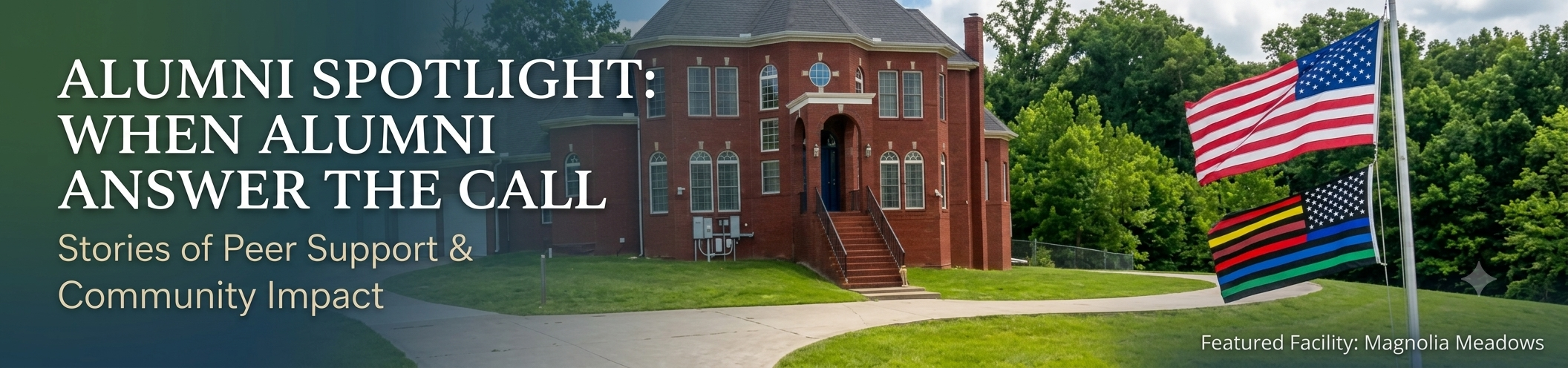
When Alumni Answer the Call
By: Magnolia Meadows
 How One Conversation Helped a First Responder Choose Treatment
"If I can talk someone else into getting help... why won't I get help myself?"
Those were the words one of our current clients shared during a recent conversation about what led her to GRIT. Like many first responders, she wasn't convinced she needed treatment. She was still showing up for work. Still taking care of everyone else. Still doing her job. From the outside, she looked okay. Inside, she was anything but.
Just weeks before calling us, she had experienced a string of suicides that left her emotionally numb. Then came one call she couldn't shake. A person was preparing to jump from a bridge. She talked them down, convinced them to accept help, and watched them choose life.
Driving away from that scene, one thought kept replaying in her mind:
"If I can convince them to get help... why can't I?"
Even then, asking for help wasn't easy. She had spent years believing PTSD wasn't real. She had gone to therapy before, but admitted she had become an expert at changing the subject whenever conversations became uncomfortable. She could function at work, but once the shift ended and life became quiet, everything she had pushed away came rushing back. Medication helped her keep moving, but as she put it, it simply allowed her to "put the mask back on." She worried about money. She worried about leaving work. Most of all, she worried about leaving her husband.
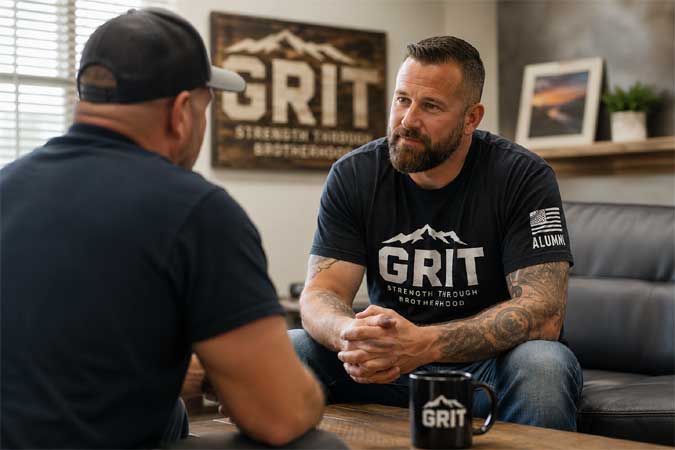
Then something happened that has become one of the most meaningful parts of our admissions process. Knowing she still had reservations, Jimbo connected her with one of our alumni, a first responder who had already walked this road. They talked for nearly two hours. Not about insurance. Not about policies. Not about paperwork. They talked about life. They talked about functioning at work while quietly falling apart everywhere else. They talked about masking emotions, convincing everyone around you that everything is fine, and the fear of stepping away from the job you love. When the conversation ended, she remembers thinking she had gotten everything off her chest and no longer needed treatment.About an hour later, her phone rang again. The alumnus simply said, "I know you're not okay. The fact that you're asking these questions means you already know what you need to do."
Wondering what treatment is really like?
Our Alumni Peer Support Program gives you the opportunity to speak with
Magnolia Meadows alumni who have experienced the journey firsthand.
Learn what to expect before admission, what daily life in treatment is
like, and how recovery continues after discharge. Through honest,
real-life conversations, alumni provide insight, encouragement, and hope
to help you feel more confident about taking the next step toward healing.
You will speak directly with an alumnus or alumna in the same field who
can provide honest, transparent feedback about their experience in
treatment and at Magnolia Meadows.
Talk to a Alumni
Today, that same alumnus still shows up. Every week he joins our Alumni Support Group. He kept texting her throughout treatment. He even drove to GRIT, just as he promised, so they could finally meet face-to-face. "He was a complete stranger," she told me. "But he felt like one of the closest people because I'd been more vulnerable with him than almost anyone." That is exactly why we continue growing our Alumni Support Program.
We have alumni who volunteer to speak with prospective clients who are unsure about treatment because they remember exactly what it felt like to stand on that ledge of uncertainty. Sometimes
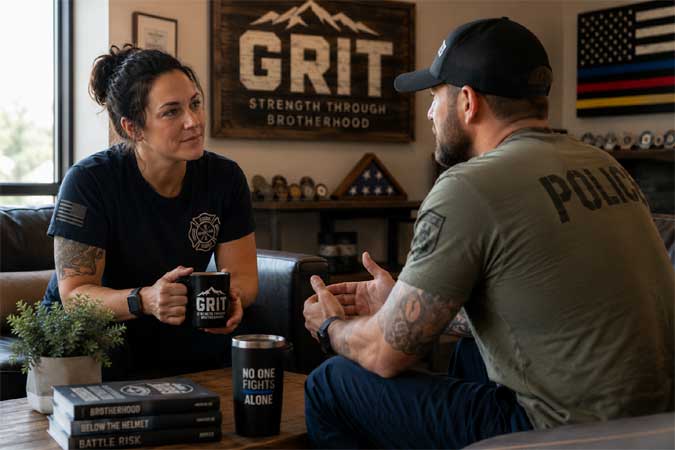 the most powerful person to answer those difficult questions isn't a therapist or an admissions coordinator, it's someone who has already walked through the fear and come out the other side.
The support doesn't end once someone is admitted. Every week, alumni return to join our virtual support group with current clients. They answer questions about returning home, rebuilding relationships, going back to work, maintaining recovery, and navigating the realities of life after treatment. More importantly, they become living proof that healing doesn't stop at discharge.
Our client shared something else that stuck with me.
She said it was comforting to hear alumni talk honestly about life after treatment because, as she put it, "It's not all rainbows and butterflies going home." Yet seeing them healthy, working, laughing, and continuing to grow gave her confidence that the difficult parts wouldn't last forever. She is already planning to join Alumni Group after discharge. She'll attend our annual Alumni Picnic. She's reconnecting with the friends she made in treatment for hiking trips and whitewater rafting. And perhaps most importantly, she wants to become one of the people answering the phone for someone else who is afraid to take that first step.
Near the end of our interview, I asked what advice she would give someone who is still on the fence about treatment. Her answer was simple. "If you're considering it and you're thinking about it, you already know the answer. You don't need someone else to convince you. You just have to take that really scary step."
That is the heart of our alumni community. It isn't about having all the answers. It's about walking beside someone long enough for them to realize they already know what they need to do. Because sometimes hope sounds less like a motivational speech...and more like a phone call from someone who quietly says, "I've been where you are. Keep climbing the hill."
Magnolia Meadows Residential Treatment Facility provides Treatment exclusive for First Responders & Veterans battling Trauma, Mental Health Conditions and Co-Occurring Disorders, creating a healing atmosphere for recovery, and instill a confident hope that better days are ahead.
Reach out to learn more or speak with an admissions specialist.
855-644-7500
[email protected]