
Beyond the Therapy Room: The Role of Experiential Therapy in First Responder and Military Recovery
Healing isn’t always about sitting in a room and talking about what happened. Sometimes, it’s about getting back out into the world and experiencing life differently.
For first responders, veterans, and active-duty military personnel, years of high-stress environments, repeated exposure to trauma, and a culture built around responsibility and readiness can make stepping away from those roles difficult.
When someone enters residential treatment, the focus often begins with addressing trauma, mental health concerns, substance use, and the impact these experiences have had on everyday life. But recovery involves more than understanding what happened. It also involves learning how to move forward. That’s where experiential therapy can play an important role.
What Is Experiential Therapy?
Experiential therapy uses structured activities and real-world experiences to support therapeutic goals. Rather than relying exclusively on conversation, it creates opportunities for individuals to recognize emotions, practice coping skills, build relationships, and respond to situations in healthier ways. These experiences can include outdoor recreation, physical activity, mindfulness, team challenges, creative expression, and community outings. The activity itself isn’t necessarily the therapy. It’s what happens during the experience, how someone responds, and what they learn from it that gives the activity therapeutic value.
A Brief Background on Experiential Therapy
Experiential therapy as a formal approach traces its roots to the work of psychiatrist Carl Whitaker and social worker Virginia Satir in the mid-twentieth century. Both emphasized the importance of present-moment experience, authentic emotional expression, and genuine human connection in the therapeutic process, principles that remain central to experiential approaches today.
Over the following decades, the model expanded significantly. Researchers and clinicians adapted experiential principles across a wide range of modalities, from adventure-based and wilderness therapy programs in the 1970s to the integration of equine-assisted, art-based, and body-centered approaches now used in clinical settings worldwide. Today, experiential therapy is recognized as a valuable complement to evidence-based treatments for trauma, PTSD, substance use disorder, depression, and anxiety, particularly in populations for whom traditional talk therapy alone is insufficient.
Types of Experiential Therapy
Adventure and Outdoor Therapy
Uses wilderness settings, hiking, kayaking, and other outdoor experiences to build resilience, self-awareness, and interpersonal skills. This is a core component of GRIT at Magnolia Meadows programming.
Art Therapy
Engages creative expression through drawing, painting, or other visual media to help individuals process emotions that may be difficult to verbalize.
Music Therapy
Uses structured musical activity, listening, playing, or composing, to support emotional regulation and self-expression.
Psychodrama and Role-Playing
Involves acting out scenarios or situations to explore emotional responses, practice new behaviors, and gain perspective on past experiences.
Equine-Assisted Therapy
Interaction with horses under clinical supervision, used to develop emotional regulation, trust, and nonverbal communication skills.
Mindfulness and Somatic Practices
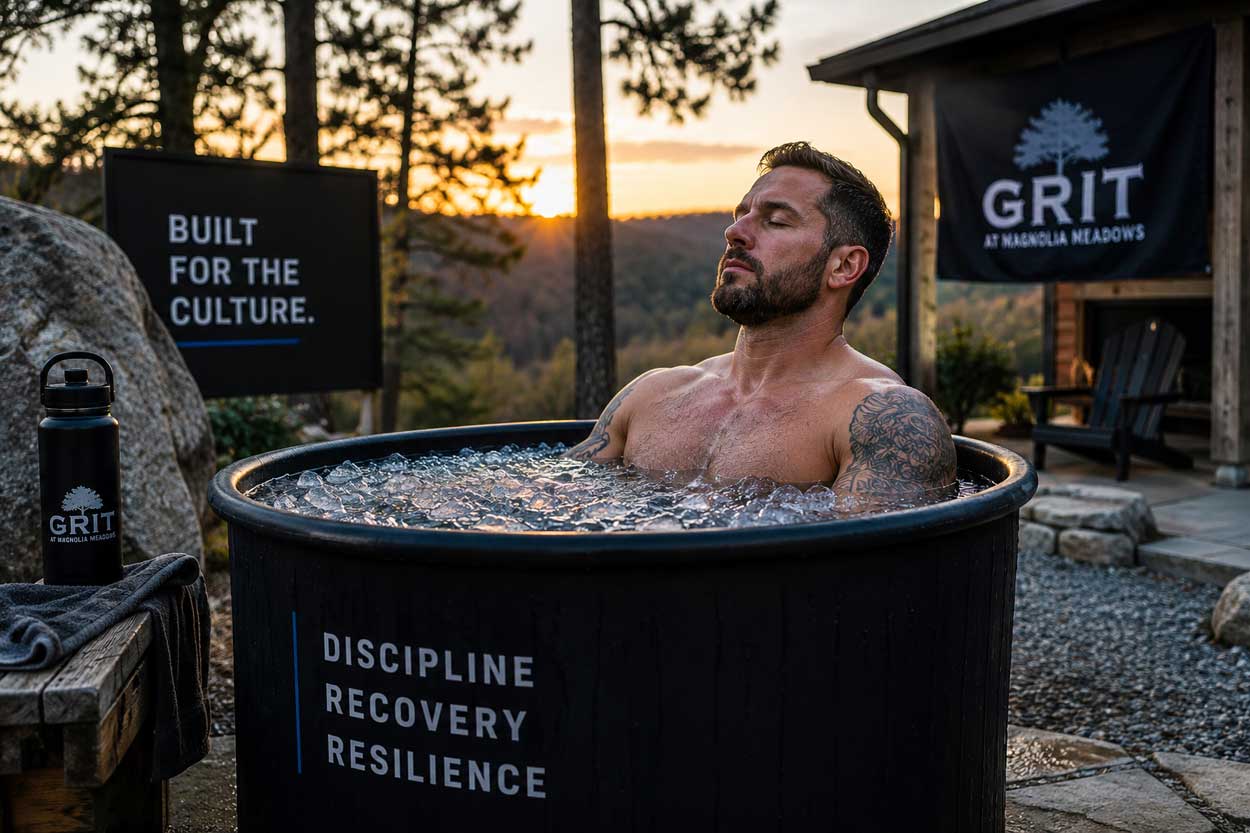
Body-centered approaches such as yoga, breathwork, and meditation that help individuals reconnect with physical sensations and regulate the nervous system. GRIT incorporates yoga and ice baths as part of this dimension.
Team and Challenge Activities
Group-based activities designed to surface interpersonal patterns, build communication, and develop trust, including structured challenges, community outings, and recreational activities like bowling.
Not every modality is appropriate for every individual. At GRIT at Magnolia Meadows, experiential activities are selected based on clinical appropriateness, individual needs, and therapeutic goals.
Why It Matters for First Responders and Military Personnel
First responders, veterans, and military personnel are accustomed to functioning under pressure. They’re trained to assess situations, make decisions, respond quickly, and maintain control when circumstances become unpredictable. Those skills are essential in their professions. However, the same patterns can sometimes make it difficult to slow down, recognize emotional responses, ask for support, or become comfortable with vulnerability. Experiential activities provide a different environment in which to practice those skills.
Putting Coping Skills Into Practice
Learning emotional regulation, distress tolerance, and grounding techniques in a therapy session is one thing. Using those skills when frustration, uncertainty, anxiety, or discomfort shows up in real life is another. A bowling alley, hiking trail, or community outing may seem like an ordinary activity, but each can create opportunities to recognize triggers, manage discomfort, communicate with others, and practice skills learned in treatment. Rather than simply discussing coping strategies, clients have opportunities to use them in situations that reflect everyday life.
Rebuilding Trust and Connection
Trauma, depression, and substance use can contribute to isolation and difficulty connecting with others. Shared experiences offer opportunities for communication, teamwork, appropriate vulnerability, and support without the pressure of a traditional group discussion. For individuals accustomed to the camaraderie of a firehouse, police department, EMS crew, or military unit, rebuilding healthy connections can be particularly meaningful.
Rediscovering Enjoyment Outside the Job
For many first responders, veterans, and military personnel, professional identity becomes closely connected to personal identity. When someone steps away from duty, whether temporarily or permanently, they may struggle to remember what they enjoy outside their profession. Experiential activities provide opportunities to explore interests, experience enjoyment, and reconnect with parts of life that may have been pushed aside.
Turning Everyday Experiences Into Therapeutic Opportunities
One of the benefits of incorporating experiential activities into residential treatment is the opportunity to recognize patterns as they happen, rather than only discussing them afterward. Someone who struggles with control may find themselves uncomfortable relying on others during a group activity. Another individual may recognize how quickly frustration builds when something doesn’t go as planned. Someone who has spent years remaining constantly alert may discover how difficult it is to relax, even in a safe environment.
These moments aren’t necessarily setbacks. With appropriate clinical support, they can become opportunities for awareness, reflection, and growth. Residential treatment provides opportunities to connect these experiences with the work being done in individual and group therapy. The goal isn’t to eliminate every uncomfortable emotion. It’s to develop the ability to recognize it, manage it, and respond differently.
How GRIT Incorporates Experiential Activities
At GRIT at Magnolia Meadows, experiential activities are one component of our comprehensive approach to treating first responders, veterans, and active-duty military personnel. Depending on individual needs, clinical appropriateness, and programming, activities may include hiking, kayaking, bowling, yoga, ice baths, outdoor experiences, and community outings. We're also exploring a few additional ideas to expand our experiential programming and bring new opportunities to the facility. These aren’t simply opportunities to fill time or get away from the facility. They can provide opportunities to practice emotional regulation, recognize triggers, strengthen interpersonal skills, rebuild confidence, and experience healthy enjoyment without relying on old coping patterns. Experiential programming complements the clinical work taking place through approaches such as EMDR, cognitive behavioral therapy, dialectical behavior therapy, and other individualized interventions. The goal isn’t to replace traditional treatment. It’s to help clients carry what they’re learning into situations that resemble everyday life.
Recovery Has to Extend Beyond Treatment
Eventually, residential treatment ends. Clients return to families, careers, relationships, responsibilities, and environments that may still present challenges. The ability to recognize a trigger, manage an uncomfortable emotion, communicate a need, or participate in life without returning to unhealthy patterns becomes increasingly important. Experiential activities offer opportunities to begin practicing those responses before returning home. Recovery isn’t measured only by what someone can talk about in a therapy session. It’s also reflected in how they begin to live, connect, respond, and move forward outside of it.
Is experiential therapy covered by insurance?
Experiential programming is delivered as part of residential mental health and substance use treatment, which is typically covered, including by TRICARE and VA benefits. Our admissions team will verify your coverage before you arrive.
Frequently Asked Questions
What is experiential therapy?
Experiential therapy is a broad category of therapeutic approaches that use structured activities, real-world experiences, and hands-on engagement, rather than conversation alone, to support emotional healing and skill development. Activities may include outdoor recreation, creative arts, mindfulness practices, team challenges, and community outings, depending on the clinical approach and individual needs.
What are the main types of experiential therapy?
Common types include adventure and outdoor therapy, art therapy, music therapy, equine-assisted therapy, psychodrama, mindfulness and somatic practices, and team-based challenge activities. Many residential treatment programs integrate several of these modalities as a complement to traditional clinical care.
What are the benefits of experiential therapy?
Research and clinical practice support experiential therapy’s ability to help individuals practice coping skills in real-world situations, develop emotional regulation, rebuild trust and interpersonal connection, reduce avoidance, and rediscover enjoyment in life outside of their professional identity. For first responders and veterans, it offers a way to engage with recovery that aligns with their action-oriented, mission-driven nature.
Who developed experiential therapy?
Experiential therapy was pioneered by psychiatrist Carl Whitaker and social worker Virginia Satir in the mid-twentieth century, with roots in humanistic psychology. The approach has since expanded through contributions from adventure therapy researchers, somatic practitioners, and clinicians working across trauma, addiction, and mental health treatment.
Is experiential therapy evidence-based?
Experiential approaches have a growing evidence base, particularly in the treatment of trauma, PTSD, and substance use disorder. They are most effective when used as a complement to established evidence-based treatments, such as EMDR, CBT, or DBT, rather than as a standalone intervention. At GRIT at Magnolia Meadows, experiential programming is integrated into a comprehensive clinical treatment plan.
Is experiential therapy right for first responders and veterans?
Yes, and in many cases, it is particularly well-suited to this population. First responders, veterans, and military personnel are often more comfortable with action and task-oriented challenges than with purely verbal therapeutic formats. Experiential activities provide a natural entry point for practicing the emotional regulation, flexibility, and interpersonal skills that support lasting recovery.
Recovery isn’t just what you talk about. It’s what you practice.
GRIT’s experiential programming helps you carry what you’re learning into the life you’re rebuilding.