

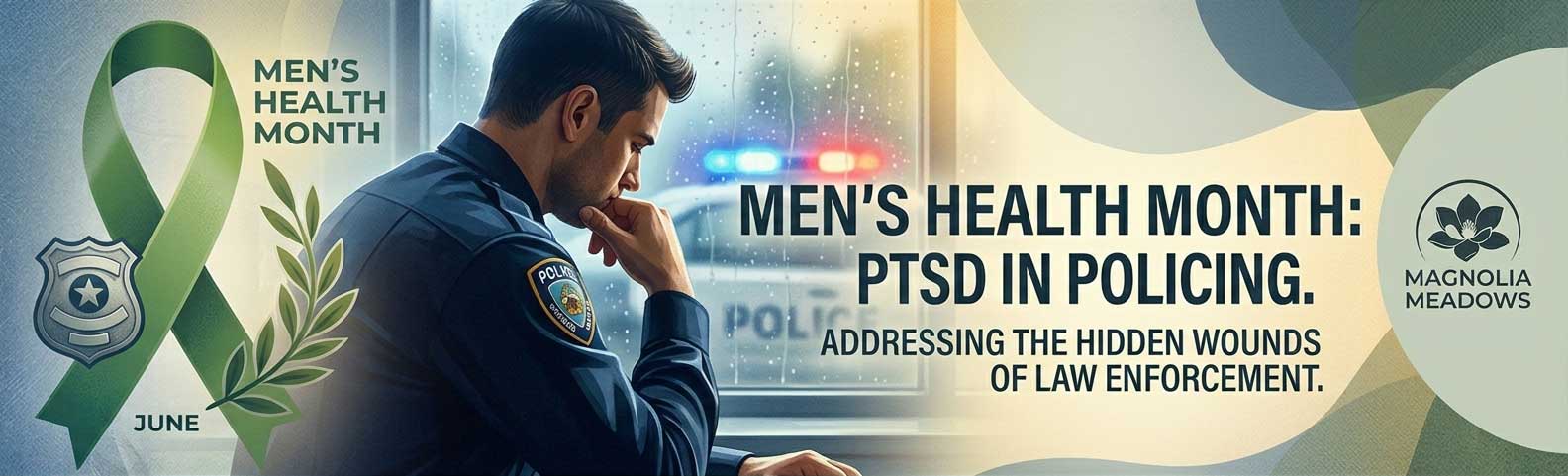
Men's Health Month & PTSD in Policing: The Signs Officers Stop Recognizing
By: Magnolia Meadows
PTSD in policing rarely starts with one single call. More often, it builds quietly over years. One fatal wreck. One child death. One domestic violence scene. One suicide. One shift of back-to-back trauma after another until the body and mind stop recognizing what "normal" is supposed to feel like. The difficult part is many officers never label it as trauma. They call it "the job".
In police culture, hypervigilance becomes officer safety. Emotional shutdown becomes professionalism. Dark humor becomes coping. Isolation becomes "protecting the family." Increased drinking becomes "blowing off steam." What starts as survival slowly becomes a lifestyle, and over time many officers stop recognizing the signs that their nervous system has been stuck in survival mode for years.
PTSD in law enforcement does not always look like flashbacks or panic attacks. Sometimes it looks like sitting with your back to the wall everywhere you go. Sometimes it looks like never being able to fully relax off duty. Irritability. Emotional numbness. Trouble sleeping. Cynicism. Short temper. Overworking. Feeling disconnected at home but completely comfortable on shift.
Research continues to show that police officers experience PTSD and depression at significantly higher rates than the general population. One large review found that roughly 1 in 7 police officers worldwide experience PTSD or depression, with officers experiencing nearly double the prevalence rates of PTSD compared to civilians. Another wellness survey found that 71% of officers reported sleep disturbances, 50% reported anger issues and family strain, and 35% identified symptoms consistent with post-traumatic stress or PTSD.
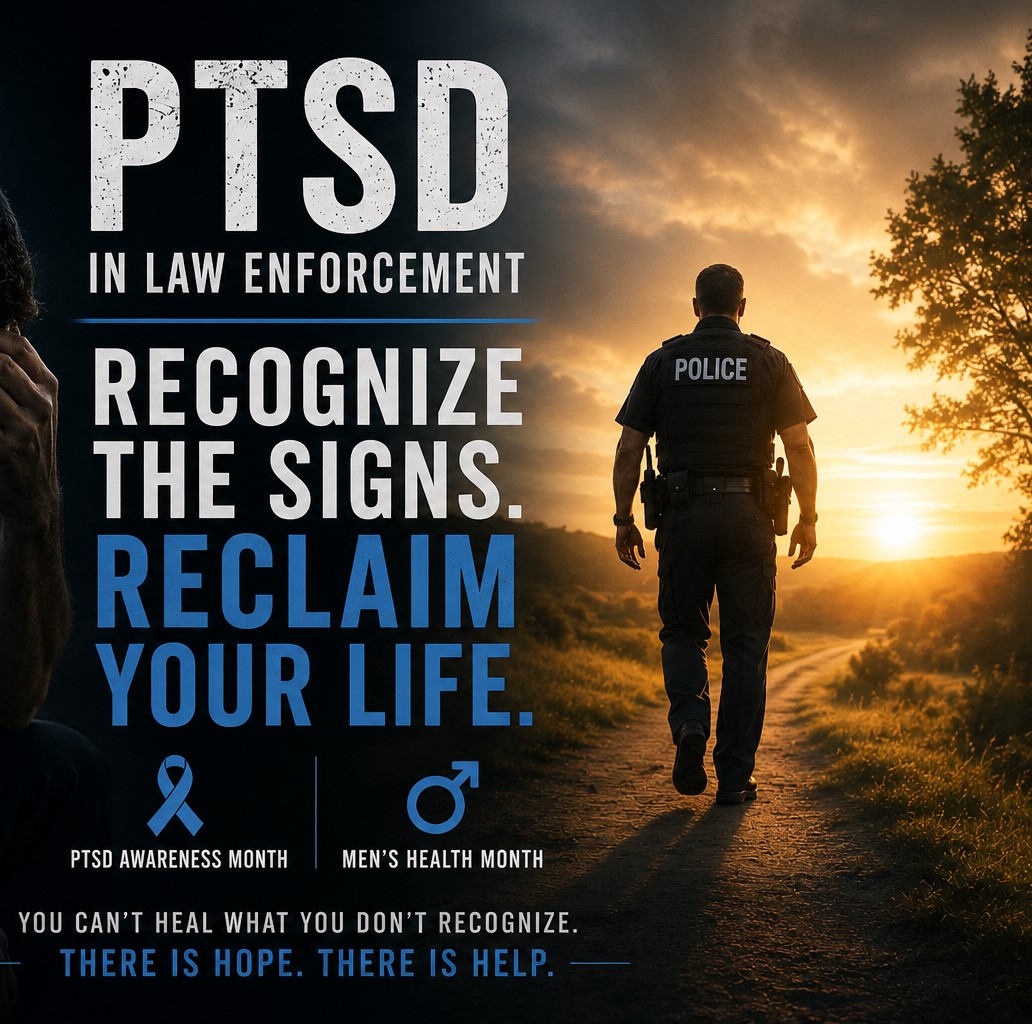 The overlap with Men's Health Month is impossible to ignore. Law enforcement remains a profession heavily shaped by male culture; a culture that often rewards stoicism, emotional control, silence, and pushing through pain. Many officers were taught long before the academy to suppress emotion, handle problems internally, and keep moving no matter what they were carrying mentally. That conditioning may help someone survive difficult calls in the moment. It does not always help them heal afterward.
Many officers are still showing up to work, still handling calls, still functioning at a high level externally which makes it easy to convince themselves they are "fine." But functioning is not always the same thing as being healthy.
Cumulative trauma exposure affects sleep, relationships, emotional regulation, physical health, substance use, and overall quality of life. Research has also linked chronic policing stress and trauma exposure to increased rates of depression, alcohol misuse, cardiovascular disease, relationship conflict, and suicide risk among officers.
This conversation extends far beyond law enforcement alone. Firefighters, EMS, dispatchers, corrections officers, ER personnel, and military service members often experience the same pattern. Trauma responses become normalized because the culture rewards functioning while quietly discouraging vulnerability. The reality is this: recognizing the signs is not weakness. It is awareness.
 You cannot heal what you do not recognize.
And sometimes the strongest thing a first responder or officer can do is acknowledge that the things they have seen, carried, and buried over the years may actually be affecting them more than they realized.
Magnolia Meadows Residential Treatment Facility provides Treatment exclusive for First Responders & Veterans battling Trauma, Mental Health Conditions and Co-Occurring Disorders, creating a healing atmosphere for recovery, and instill a confident hope that better days are ahead.
Reach out to learn more or speak with an admissions specialist.
855-644-7500
[email protected]