

PTSD and Dispatch: Living in the Unfinished Stories
By: Magnolia Meadows
You answer the call, gather the information, keep the caller talking, send the resources, and coordinate the response. Then the line goes dead. The call is over, but the questions remain. Did they make it? Did help get there in time? What happened to that child? Did that officer go home? Did the caller survive? Most of the time, you'll never know.
That's a burden unique to dispatch.
Dispatchers spend entire careers sitting in the middle of unfinished stories. Not one or two, but thousands. They hear people during some of the most frightening, painful, and desperate moments of their lives. They hear things most people will never hear. Then they're expected to move immediately to the next emergency as if nothing happened. There is rarely a debrief, rarely closure, and often no ending. Just another ringing phone and another person needing help.
The public often sees dispatch as sitting behind a desk, but dispatchers know better. Every call requires split-second decisions. Every word matters. Every question serves a purpose. Lives can depend on remaining calm when the person on the other end of the line is anything but. That level of responsibility carries weight, and over time that weight can begin to accumulate.
Many dispatchers find themselves replaying conversations long after the call has ended. Not because they did anything wrong, but because they're searching for answers they'll never get. They wonder if they missed something, if they could have said something differently, or if there was something else they could have done. The reality is that most of those questions don't have answers, yet many dispatchers continue carrying them anyway.
PTSD in dispatch doesn't always look the way people expect it to. Most dispatchers aren't walking around saying, "I think I have PTSD." More often, it sounds like, "I just need some quiet," or "I don't answer my phone on my days off." Sometimes it's avoiding crowds, having a shorter fuse than you used to, or convincing yourself that you've always slept like this. Other times it's a call from years ago that still pops into your head for no apparent reason, or one that still bothers you even though you can't quite explain why.
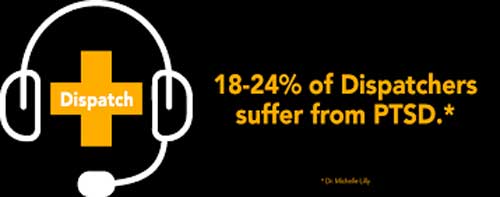 The challenge is that many of these things become normalized. After enough years, they start to feel like part of the job rather than signs that you're carrying more than you realize. What began as a normal reaction to stress slowly becomes your normal. The sleepless nights, the irritability, the emotional exhaustion, and the tendency to replay conversations long after they've ended can become so familiar that they stop standing out.
For many dispatchers, PTSD isn't defined by one catastrophic call. It's the accumulation of thousands of moments, thousands of voices, and thousands of unfinished stories that never fully leave.
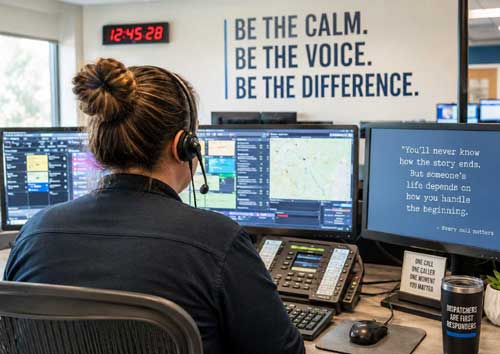 One thing I've noticed from working with first responders is that dispatchers are often incredibly hard on themselves. They'll extend grace to firefighters, law enforcement officers, paramedics, and callers. But when it comes to themselves, that grace tends to disappear. Many convince themselves they shouldn't be affected because they weren't physically present at the scene.
The brain doesn't work that way.
Trauma isn't measured in miles. It's measured in impact. Hearing someone's worst moment while being responsible for helping manage it carries weight. A lot of weight.
At GRIT, we believe dispatchers are first responders because they are. They are often the first voice someone hears when their world is falling apart. They are the calm in the chaos, the steady voice in the dark, and the person helping hold everything together until help arrives.
If you're a dispatcher, pay attention to the weight you're carrying. Not because something is wrong with you, but because carrying thousands of unfinished stories was never something you were meant to do alone.
You may never know how every story ended.
But your story deserves attention too.
Magnolia Meadows Residential Treatment Facility provides Treatment exclusive for First Responders & Veterans battling Trauma, Mental Health Conditions and Co-Occurring Disorders, creating a healing atmosphere for recovery, and instill a confident hope that better days are ahead.
Reach out to learn more or speak with an admissions specialist.
855-644-7500
[email protected]