

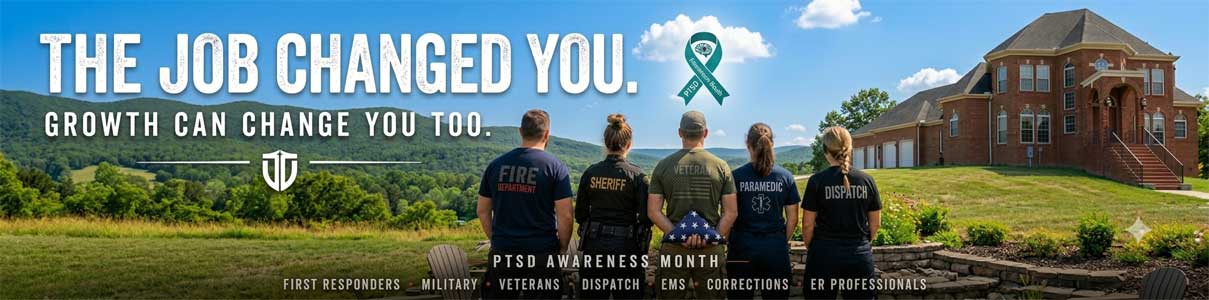
The Job Didn't Break You. It Changed You.
By: Magnolia Meadows
Every year around this time, articles start popping up everywhere about PTSD. We see the statistics. We see the signs and symptoms. We hear reminders to check on our people and ask for help if we need it. None of that is wrong. But if you've spent any amount of time in law enforcement, fire, EMS, dispatch, corrections, the military, or an ER, you've probably heard it all before. So let's talk about something different.
The job changed you, not broke you, changed you. Most people who choose these careers are not looking for an easy life. They're drawn to purpose. They want to serve. They want to make a difference. Somewhere along the way they learn how to operate in situations that most people spend their lives trying to avoid.
The first bad call sticks with you. The hundredth one usually doesn't. At least not in the same way. You learn how to adapt, how to keep moving, how to compartmentalize, how to laugh at things other people would never joke about, and/or how to walk into chaos and function. Those aren't flaws. They're survival skills. The problem is that survival skills don't always stay at work. They show up at home, in relationships, when you're trying to sleep, when you're sitting in a restaurant and automatically looking for exits without realizing it. They show up when your family says you've changed and you honestly don't know what they're talking about. Because from your perspective, this is just who you are now.
And maybe that's the biggest lie trauma tells. That this version of you is permanent.
One of the things I hear most often from first responders and military personnel is some variation of..."It's just part of the job." Sometimes they're right. The job absolutely changes people. The question is whether the changes are taking you where you want to go.
- Are you becoming more disconnected from the people who matter most?
- Do you find yourself more irritable than you used to be?
- Is work easier than being at home?
- Do you feel like you're constantly "on" even when nothing is happening?
- Do you remember what you enjoyed before the job became your entire identity?
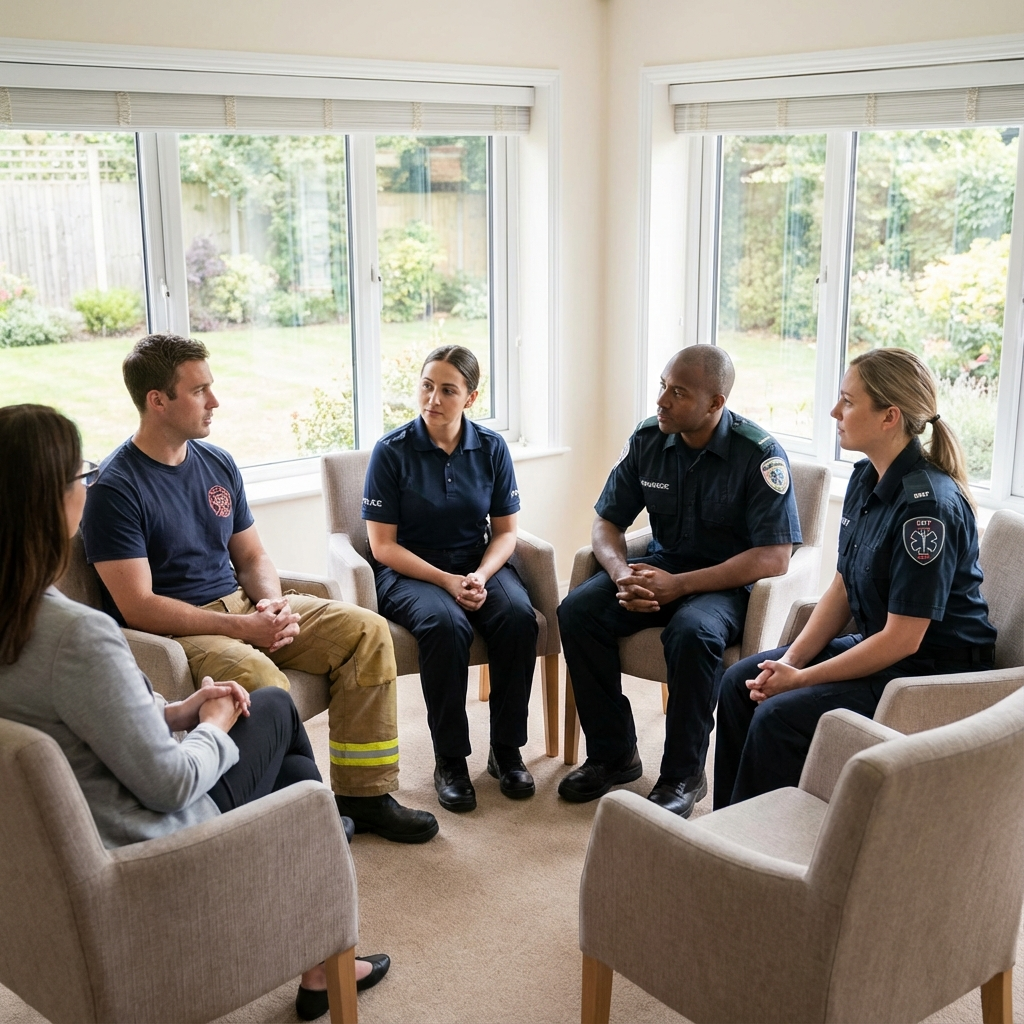
One of the most encouraging things we've seen at GRIT is that trauma doesn't get the final say. People often arrive believing they are stuck with the person they've become. Then something shifts... maybe it's EMDR, maybe it's finally talking about things they've carried for years, maybe it's realizing they're sitting in a room full of people who understand without needing an explanation. Whatever the catalyst is, they begin to see something they haven't seen in a long time, possibility.
Not because the past changed, it's because they changed. That's what post-traumatic growth really is. It's recognizing that while you may not have chosen what happened to you, you still get a say in what happens next. Some of the strongest, healthiest, most self-aware people you'll ever meet are people who have walked through hell and refused to stay there.
This PTSD Awareness Month, I would encourage you to think less about whether you meet the criteria for PTSD and more about a simpler question:
Are you becoming the person you want to be?
If the answer is no, that doesn't mean you're broken. It means you might be carrying more than you were ever meant to carry alone and that's something worth paying attention to. The job changed you. The good news is that growth can change you too.
Magnolia Meadows Residential Treatment Facility provides Treatment exclusive for First Responders & Veterans battling Trauma, Mental Health Conditions and Co-Occurring Disorders, creating a healing atmosphere for recovery, and instill a confident hope that better days are ahead.
Reach out to learn more or speak with an admissions specialist.
855-644-7500
[email protected]